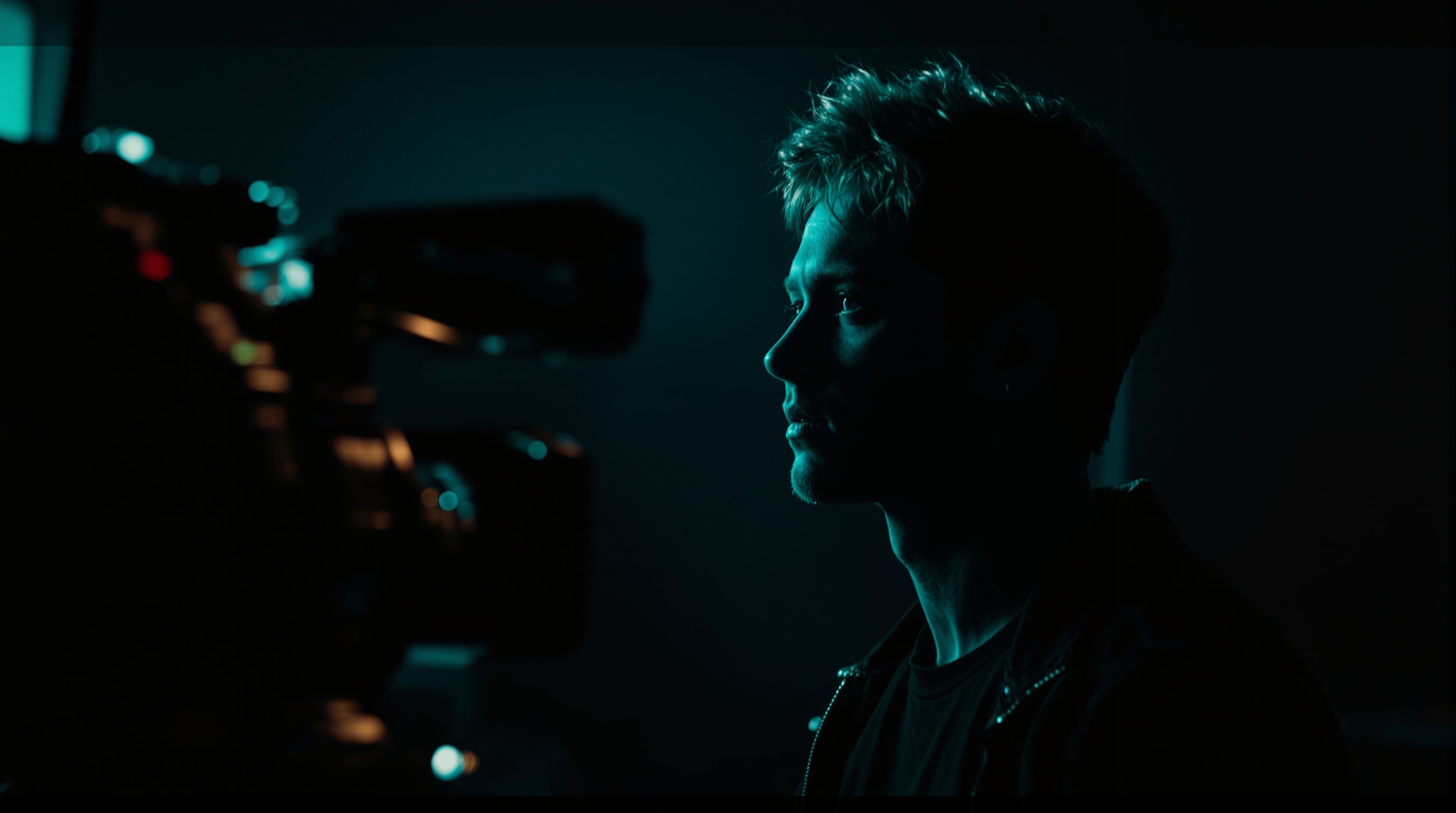
Expensive footage and cheap footage are not separated by the price of the camera. They are separated by intention. A film shot on a modest camera by someone who understands light, lenses, and where to stand will always beat a film shot on the finest sensor by someone who does not. Cinematography is the craft of deciding what the audience sees, in what light, from what distance — and those decisions cost thought, not money.
Where You Stand Is the Whole Job
Before lenses or lighting, cinematography is camera placement. The height of the camera, its distance from the subject, and the angle it looks from together create the entire feeling of a shot. A low angle makes a figure loom; a high angle makes them small; eye-level makes them our equal. Move the camera a foot to the side and a cluttered frame becomes clean. Beginners obsess over gear and neglect the free, infinite variable of position. Master directors will spend twenty minutes finding the one spot where the shot finally means something.
Understand Exposure as a Trade
Every camera balances three controls — aperture, shutter, and sensitivity — and each buys you something at a price. A wide aperture throws the background into soft blur and isolates your subject, but leaves little room for focus error. A higher sensitivity lets you shoot in dim light but introduces grain. Learning to feel these trades in your hands, rather than trusting an automatic mode, is the difference between a camera operator and a cinematographer. Shoot in manual until the numbers become instinct. The craft archive of the American Society of Cinematographers is a superb place to study how professionals think about these choices.
Shape Light; Don't Just Add It
The most common lighting mistake is making things bright. Good lighting is not about quantity; it is about direction and contrast — deciding where the shadows fall. A single lamp placed to the side of a face, letting the far cheek drop into shadow, looks like cinema. The same face lit flatly from the front looks like a video call. You can shape gorgeous light with almost nothing: a window, a bedsheet to diffuse it, a piece of foam board to bounce it back. Learn to see the shadow, not the light.
Motivate Every Move
A moving camera should have a reason. When the camera drifts, pushes in, or follows, the audience feels it even if they cannot name it — so an unmotivated move reads as restlessness, while a motivated one deepens the moment. Push in slowly as a character arrives at a hard realization and the audience leans in with you. Move because the story moves, not because a slider was available. When in doubt, lock the camera off and let the performance carry the frame; stillness is a choice, and often the braver one.
Protect the Look in Post
Cinematography does not end at the shoot. If your camera can record a flat, low-contrast profile, it preserves detail in highlights and shadows that you can shape later in the color grade. Shoot with the final image in mind but the raw latitude intact. A consistent, deliberate look across every scene — even a simple one — is one of the clearest signals that a film was made by someone who knew what they were doing.